
The Student–Teacher Bridge: How to Become a Classroom Collaborator
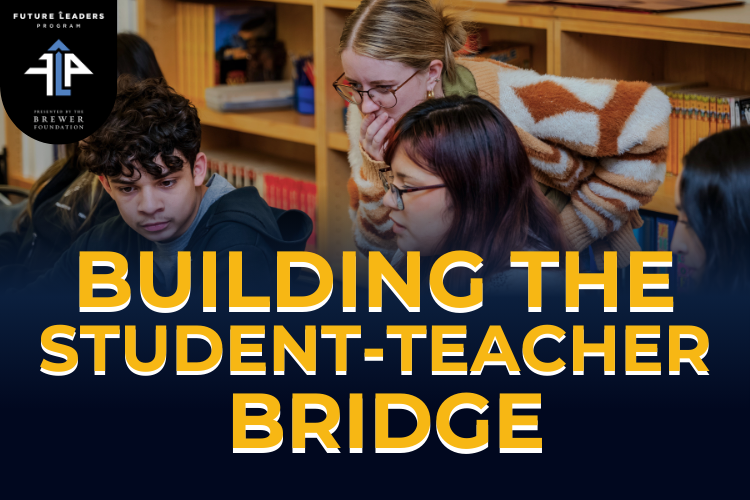
In many classrooms, there is an invisible wall. On one side is the teacher, the "deliverer" of information; on the other is the student, the recipient. The students who are able to advance past the normal rate of learning and growth beyond others in academics, in their career, and even in their personal lives are the students who learn to break down that wall. That transition from student to collaborator may be the single most important soft skill you can develop before college.
Here are five ways to start building that bridge today:
1. Master the "Professional Inquiry"
A collaborator doesn't just ask, "What’s on the test?" They ask, "Why does this matter?" When you show interest in the value of the lesson, you signal to your teacher that you are an active participant in the scholarship.
There are questions about compliance like:
“What’s on the test?”
“Is this for a grade?”
“What is the minimum word count?”
These questions show you can follow rules but in life that’s the minimum.
Instead, learn to ask questions that show your interest in the value of the lesson. Questions like these show that you are an on-task student during the lecture:
“How would this apply in the real world?”
“What could be some opposing views of this argument?”
“What types of jobs involve this study”
2. Provide "Real-World Feedback"
Teachers often feel like they speak to a void. They work diligently creating lesson plans and facilitating discussions yet rarely receive communication back from it.
By being a collaborator, you not only help teachers in improving classroom flow, but you actually help yourself in deepening classroom discussions and developing thoughts more effectively.
If something in class really resonated with you, say so.
If you find a resource that adds to the lesson, share it.
It can be as easy as saying:
“I came across an article that’s relevant to our discussion we had yesterday and think the class might find it interesting.”
This accomplishes three things:
Shows your intellectual curiosity
Helps your teacher see what connects to students
Takes your lessons beyond the classroom
3. Own the "Civil Discourse" in the Room
In a world where meaningful dialogue is rare, be the person who brings intellectual rigor to class discussions. Use classrooms as a place to practice disciplined disagreement.
When you disagree, prove your point with evidence. A skilled collaborator doesn’t quiet down when they think differently, they show it intellectually.
Use phrases like:
“I see your point, but…”
“I think we should also consider…”
Or for example:
“I agree that AI is powerful. But if students in South Dallas don’t have the same access to it as students in North Dallas, aren’t we accelerating inequality instead of solving it?”
This shows:
Thoughts beyond emotion
Nuance
You’re willing to raise the level of the discussion
4. Transition to "The Peer Review"
When you receive feedback on an assignment, don't just look at the grade. Treat it like a Peer Review and as an opportunity for growth.
Follow up on a graded paper by saying:
"Thank you for the notes on my thesis structure. I’ve revised my approach for the next unit. Would you mind taking a 30-second look to see if I’m headed in the right direction?"
This way you’re able to demonstrate:
You value critique
You can build from mistakes
You are thinking about your skills beyond the short term
Why This Matters for Your Future
When you act as a collaborator, you stop being a name on a seating chart.
You start being:
A colleague
A thinker
A problem solver
This is how you secure the recommendation letters that get you into Northwestern, NYU, or the Ivy League. Collaboration is the bridge between compliance and impact. You aren't just a student and a transcript; you are a future leader in training.


